





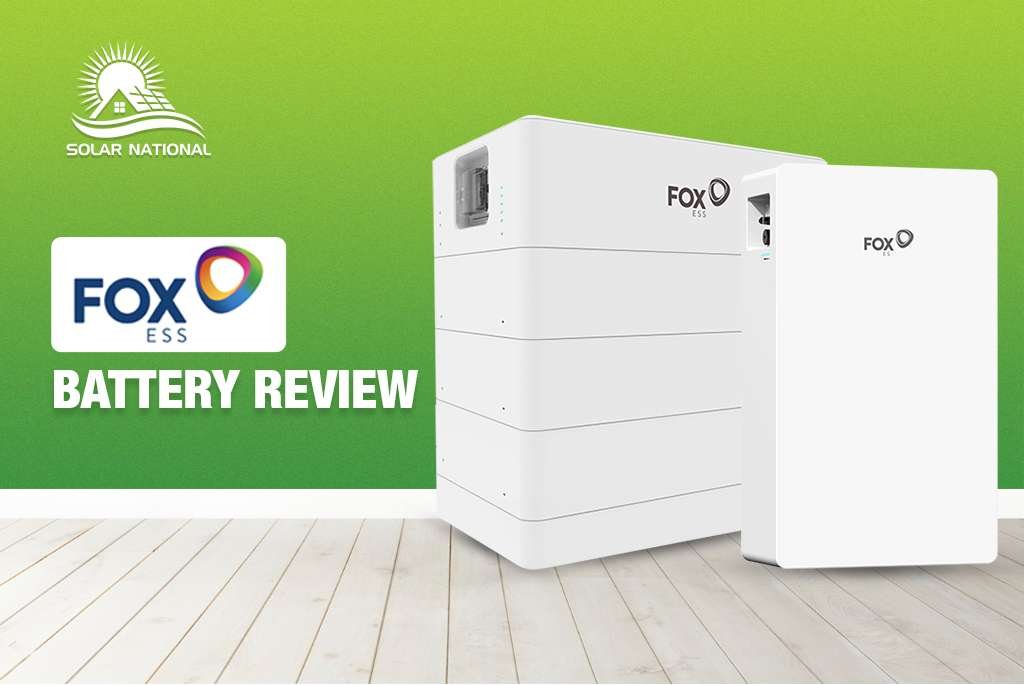
Fox ESS has become one of the most talked-about home battery brands in Australia because it hits a sweet spot: modular sizing, sharp pricing, and a fairly tidy user experience (especially compared with some “budget” batteries). But value only counts if the system is sized properly, installed well, and matched with the right inverter and backup expectations.
Below is a practical, Sydney-focused review of the Fox ESS Battery range, what it does well, where to be careful, and who it suits.
A Fox ESS Battery is a sensible pick if you want an affordable, scalable Solar Battery that integrates neatly with compatible hybrid inverters and gives you strong day-to-day self-consumption. Most owners buy Fox for value and stackability, not for premium “all-in-one” features.
About Fox ESS — The Company Behind the Battery
Before investing in any solar battery, it is important to understand who makes it and whether they will still be around to honour the warranty. Here is what you need to know about Fox ESS as a company.
Company Background
- Founded: 2019, Wenzhou, China
- Global Status: Forbes Global Unicorn (added May 2023) — valued at over US$1 billion
- Products: Solar inverters, home batteries, EV chargers
- Australia Launch: 2021 (inverters), 2022 (batteries), 2024 (EV chargers)
- Australian Office: 53 Willow Avenue, Springvale VIC 3171
- Australian Phone: 1300 377 369
- CEC Approved Since: 2022 (batteries)
Fox ESS shipped its first independently developed products in April 2020, just one year after founding. Their rapid growth — achieving unicorn status in just 4 years — reflects strong global demand and a significant investment in research and development.
The company’s Australian presence is backed by a dedicated support office in Melbourne, meaning warranty claims and technical support are handled locally — not redirected offshore. This is an important consideration when choosing a battery that needs to last 10+ years.
Fox ESS Battery Models Available in Australia — Which One Is Right for You?
Fox ESS offers three main battery models in Australia, each designed for different household sizes and energy needs. Here is a quick overview to help you choose the right option before diving into the technical details.
1. Fox ESS EQ4800 — Best for Most Sydney Homes
The EQ4800 is the most popular Fox ESS model in Australia. It is a high-voltage, modular battery that allows you to start small and expand as your energy needs grow.
- Perfect for: Average households using 15–30 kWh per day
- Start with 1 module (4.66 kWh) and expand up to 9 modules (41.93 kWh)
- 100% Depth of Discharge — you use every bit of stored energy
- Works with Fox ESS H1-G2, KH, H3-Smart, and H3-Pro hybrid inverters
- CEC approved in Australia since 2022
2. Fox ESS CQ6 — Best for Future Expansion & Three-Phase Homes
The CQ6 is Fox ESS’s newest generation battery with a higher capacity per module and an extended 12-year warranty. It is ideal for homeowners who want more storage from the start and plan for significant future expansion.
- Perfect for: Larger homes, three-phase properties, or EV owners
- Each module stores 5.99 kWh usable
- Expandable to 47.92 kWh (three-phase) using H3-Smart or H3-Pro inverter
- 12-year warranty with 70% battery retention — longer than EQ4800
- Aluminium casing for durability in Australian summer conditions
3. Fox ESS EP11 — Best for Simplicity & Large Fixed Capacity
The EP11 is a non-modular, high-capacity battery for households that want a large, fixed storage solution without the complexity of stacking modules.
- Perfect for: Households that want 10+ kWh from a single unit
- 10.36 kWh usable from a single battery pack
- Can be scaled to 41.6 kWh via parallel connection
- Can be floor or wall mounted — flexible for different installation spaces
- Weighs 92 kg — professional installation essential
Quick Model Comparison
|
Model |
Capacity Per Unit |
Max Expandable |
Efficiency |
Warranty |
Best For |
|
EQ4800 |
4.66 kWh/module |
Up to 41.93 kWh |
100% |
10 Years |
Most popular, flexible |
|
CQ6 |
5.99 kWh/module |
Up to 47.92 kWh |
≥95% |
12 Years |
Latest gen, best warranty |
|
EP11 |
10.36 kWh (single) |
Up to 41.6 kWh |
≥95% |
10 Years |
Simple, large capacity |
Fox ESS Battery Specifications — Key Technical Details
Below is a quick-reference specification table covering the Fox ESS battery range available in Australia. Whether you are comparing models or just want to understand what you are buying, these numbers matter.
EQ4800 — Most Popular Modular Battery
|
Specification |
Details |
|
Battery Type |
LiFePO₄ (Lithium Iron Phosphate) — safe, non-toxic, long-lasting |
|
Capacity Per Module |
4.66 kWh usable |
|
Max Expandable Capacity |
Up to 41.93 kWh (9 modules in series) |
|
Depth of Discharge |
100% — full usable energy every cycle |
|
Round-Trip Efficiency |
>95% — minimal energy loss during charge/discharge |
|
Cycle Life |
6,000+ cycles — approx. 15–16 years of daily use |
|
Operating Temperature |
Charge: 0°C to 55°C | Discharge: -10°C to 55°C |
|
Ingress Protection |
IP65 — dust-tight and protected against water jets |
|
Communication |
CAN Bus |
|
Certifications |
IEC 62619, UN38.3, EMC Certified |
|
Warranty |
10 years product warranty |
|
Casing |
Aluminium — durable and heat-resistant |
|
Compatible Inverters |
Fox ESS H1-G2, KH, H3-Smart, H3-Pro series |
EP11 — Larger Capacity Non-Modular Option
|
Specification |
Details |
|
Capacity |
10.36 kWh usable; scalable to 41.6 kWh via parallel connection |
|
Nominal Voltage |
384V |
|
Round-Trip Efficiency |
≥95% |
|
Mounting |
Floor or wall mounted |
|
IP Rating |
IP65 |
|
Dimensions |
710 x 625 x 147mm |
|
Weight |
92 kg |
|
Warranty |
10 years product warranty |
CQ6 — Latest Generation High-Voltage Battery
|
Specification |
Details |
|
Capacity Per Module |
5.99 kWh usable |
|
Max Expandable Capacity |
Up to 47.92 kWh (three-phase) or 41.93 kWh (single-phase) |
|
Battery Chemistry |
LiFePO₄ (LFP) |
|
IP Rating |
IP65 |
|
Casing |
Aluminium |
|
Warranty |
12 years with 70% battery retention |
|
Communication |
CAN Bus |
Is Fox ESS a Reliable Brand for Australian Homes?
Fox ESS batteries have been available in Australia since 2022 and have accumulated strong installer and customer feedback. Key trust signals include:
- CEC-approved products — independently verified to meet Australian standards
- Local Australian office and phone support in Melbourne
- Forbes Unicorn status confirms financial stability — company is well-funded and unlikely to disappear
- Growing installer network across VIC, NSW, QLD, SA, and WA
- Transparent warranty terms with clear throughput conditions
As with any battery that entered the Australian market after 2020, it is worth asking your installer about long-term performance data across multiple Australian summers. Solar National only recommends products we have confidence in for Sydney’s climate — if Fox ESS is right for your situation, we will tell you; if another battery suits you better, we will tell you that too.
What is a Fox ESS Battery system?
Fox ESS (founded in 2019) supplies solar inverters and energy storage products, including high-voltage batteries designed for residential use. In Australia, Fox batteries have been CEC approved since 2022 and are typically paired with compatible Fox hybrid inverters rather than being treated as a “universal battery”.
Two models commonly discussed in Australia:
- EQ4800 (modular stack) – smaller modules that stack to increase capacity
- EP11 (single pack) – a larger single battery, expandable via parallel connection
Key specs that matter in the real world
Specs look impressive on paper, but the practical questions are: how much usable storage do you get, how flexible is expansion, how weather-tough is the enclosure, and what’s the warranty backing?
Fox ESS EQ4800
- Usable capacity: 4.66 kWh per module
- Scalable storage: up to 41.93 kWh (up to 9 modules in a stack)
- Chemistry: LiFePO₄ (LFP)
- Ingress protection: IP65
- Operating temps: discharge down to -10°C
- Compatibility: works with Fox hybrid inverters such as H1-G2, KH, H3 series
Fox ESS EP11 (typical highlights)
- Usable capacity: 10.36 kWh
- Efficiency: round-trip efficiency listed as ≥95%
- Ingress protection: IP65
- Mounting: floor or wall mount
- Expandable: via parallel connection up to 41.6 kWh (as specified by the manufacturer info summarised on SolarQuotes)
Warranty snapshot
Fox ESS commonly offers a 10-year product warranty, with performance/throughput conditions (so sizing and expected cycling matter).
Fox ESS Battery Price Sydney:
Solar National offers Fox ESS EQ and CQ batteries fully installed in Sydney — with the Federal Government rebate applied directly at point of sale, no paperwork needed. Prices below include professional CEC-accredited installation, Fox hybrid inverter, FoxCloud 2.0 app setup, and 10-year (EQ) or 12-year (CQ) warranty.
| Model | Capacity | Full Price | Govt Rebate | You Pay |
|---|---|---|---|---|
| Fox ESS EQ | 14.4 kWh | $6,500 | −$3,840 | $2,660 |
| Fox ESS EQ | 19.2 kWh | $7,000 | −$4,640 | $2,360 |
| Fox ESS EQ | 24 kWh | $7,500 | −$5,440 | $2,060 |
| Fox ESS EQ | 28 kWh | $8,000 | −$6,080 | $1,920 |
| Fox ESS EQ | 33 kWh | $9,200 | −$6,280 | $2,920 |
| Fox ESS EQ | 38 kWh | $10,400 | −$6,480 | $3,920 |
| Fox ESS EQ | 41.9 kWh | $11,600 | −$6,640 | $4,960 |
| Fox ESS CQ | 17.9 kWh | $7,000 | −$4,440 | $2,560 |
| Fox ESS CQ | 23.9 kWh | $8,000 | −$5,400 | $2,600 |
| Fox ESS CQ | 29.9 kWh | $9,000 | −$6,160 | $2,840 |
| Fox ESS CQ | 35.9 kWh | $10,800 | −$6,400 | $4,400 |
| Fox ESS CQ | 41.93 kWh | $12,000 | −$6,640 | $5,360 |
| Fox ESS CQ | 47.92 kWh | $14,000 | −$6,880 | $7,120 |
Pros and cons of Fox ESS Battery systems
Pros
- Modular growth: you can start smaller and expand as your household demand changes (new baby, EV, work-from-home).
- Neat installation (when paired correctly): installers report a straightforward install process with pre-made cabling between inverter and battery on some setups.
- Good “value per kWh” reputation: third-party commentary frequently positions Fox as one of the more affordable options per usable kWh.
- IP65 enclosure: useful for Australian homes where the battery may be installed in a garage or protected external area.
Cons / watch-outs
- Not all installs include blackout protection by default: backup power is a design choice, not an automatic feature. You may need extra hardware, circuits, and switchboard work. (Many shoppers miss this.)
- Brand maturity: Fox is newer than long-standing premium players, so long-term Australian durability evidence is still building.
- Ecosystem dependence: Fox batteries are commonly paired with Fox inverters; if you’re trying to mix-and-match brands, compatibility can narrow quickly.
Is a Fox battery worth it in Sydney?
For many households, yes — if the design matches your usage.
Sydney has plenty of rooftop solar potential, but battery value swings wildly based on:
- Evening energy use (cooking, heating/cooling, pool pumps, EV charging)
- Export limits / feed-in tariff reality (often lower than people assume)
- Roof size and panel output
- Whether you actually need backup during outages
A Fox ESS Battery tends to be most satisfying when it’s used to lift self-consumption (using your own solar at night) rather than trying to “go off-grid” in suburbia.
Sizing guide: the simplest way to choose capacity
Instead of guessing, start with one question:
How many kWh do you typically use between sunset and sunrise?
Then map it like this (rule-of-thumb, not a quote):
| Night usage (kWh) | Battery goal | Who it suits |
| 4–6 kWh | Small modular stack | Apartments/townhouses, low night load |
| 7–10 kWh | Mid-size system | Typical family homes |
| 11–16 kWh | Larger stack / parallel | Bigger homes, ducted aircon, higher evening use |
Add headroom if you plan to buy an EV or shift more appliances off gas.
Backup power: what to ask your installer
If blackout protection matters, ask these questions up front:
- Will my system provide backup power, or only savings?
- Which circuits will be backed up? (lights, fridge, NBN, some power points, maybe a small aircon — usually not the whole house)
- Is an EPS/backup box required, and is it included?
- What happens during a grid outage on a sunny day? (some systems behave differently depending on configuration)
This is where quality Solar Installations Sydney providers earn their keep: design, switchboard work, compliance, and clear documentation matter as much as the battery brand.
Fox ESS Battery Rebates & Government Incentives in Australia
One of the biggest advantages of buying a Fox ESS battery right now is the Australian Government’s Cheaper Home Batteries Program, which launched on 1 July 2025. If you are a Sydney homeowner considering a Fox ESS system, here is what you need to know before making your final decision.
Federal Cheaper Home Batteries Program
The federal government now offers approximately 30% off the upfront cost of eligible solar batteries through additional Small-scale Technology Certificates (STCs). Fox ESS batteries are CEC-approved and eligible for this program.
To qualify, your system must:
- Be a battery between 5 kWh and 100 kWh capacity
- Be installed by a CEC-accredited installer (Solar National is CEC-accredited)
- Be listed on the Clean Energy Council’s approved product list
- Be installed at a residential or eligible small business property
NSW-Specific Incentives
|
Specification |
Details |
|
VPP Connection Bonus |
~$550 for 10 kWh system | ~$1,500 for 27 kWh system |
|
Previous NSW PDRS Rebate |
Was $1,600–$2,400 (suspended after 30 June 2025, replaced by federal program) |
|
Federal Rebate (current) |
~30% off upfront — applies across all states including NSW |
|
Who can claim |
NSW homeowners with CEC-accredited installation |
How Much Can You Save on a Fox ESS Battery?
A typical Fox ESS EQ4800 system with 9.32 kWh (2 modules) installed in Sydney costs approximately $9,500–$11,000 including installation. After the federal rebate, this can drop to approximately $6,500–$7,700 depending on your location and installer.
Solar National can help you calculate your exact rebate entitlement. Contact us for a free quote and rebate assessment.
How Much Does a Fox ESS Battery Cost in Sydney?
Price is one of the most common questions Australians ask when researching solar batteries. Fox ESS is known for competitive pricing compared to premium brands like Tesla Powerwall and BYD, while still delivering high performance.
Fox ESS Battery Price Guide (Before & After Rebate)
|
Configuration |
Approx. Cost (Before Rebate) |
Approx. Cost (After Federal Rebate) |
Best For |
|
Configuration |
Approx. Cost (Before Rebate) |
Approx. Cost (After Federal Rebate) |
Best For |
|
1 x EQ4800 Module (4.66 kWh) |
$5,500 – $7,000 |
$3,800 – $4,900 |
Small households, 1–2 people |
|
2 x EQ4800 Modules (9.32 kWh) |
$9,500 – $11,000 |
$6,500 – $7,700 |
Average Sydney household |
|
4 x EQ4800 Modules (18.6 kWh) |
$16,000 – $19,000 |
$11,200 – $13,300 |
Large family + EV charging |
|
EP11 (10.36 kWh) |
$10,000 – $12,500 |
$7,000 – $8,750 |
Fixed capacity needs |
Note: Prices are indicative and vary depending on your location, installer, and inverter compatibility. Solar National provides transparent pricing with no hidden fees — get a free quote to see exact costs for your Sydney home.
Factors That Affect Fox ESS Battery Price
- Number of modules (more modules = lower cost per kWh)
- Inverter required (if you need a new hybrid inverter, add $2,000–$3,500)
- Installation complexity (roof access, switchboard upgrades, etc.)
- Location — Sydney metro vs outer suburbs
- Whether you qualify for the federal rebate (CEC-accredited installer required)
Where Fox sits vs premium “all-in-one” batteries
If you’re comparing Fox to premium integrated platforms, think in trade-offs:
- Fox ESS: strong value, scalable capacity, solid essentials
- Premium all-in-one systems: more polished feature sets and integration, often at a higher cost
Even Solar4ever notes Fox can feel “no frills” compared with top-end systems — but also that “no frills” doesn’t automatically mean “cheap rubbish”.
Getting the best result with Solar National in Sydney
If you’re considering a Fox ESS Battery alongside new panels (or adding it to an existing system), the quality of the outcome usually comes down to:
- correct battery sizing based on your interval data
- inverter compatibility
- clean switchboard layout and compliant isolators
- realistic backup planning (circuits, load limits)
- monitoring setup so you can actually track performance
Solar National is Sydney-based and advertises residential and commercial solar plus battery storage, with a local office in Chatswood.
Fox ESS vs Tesla Powerwall vs Sungrow — Which Battery is Best for Sydney Homes?
If you are comparing solar batteries for your Sydney home, here is an honest, side-by-side comparison of the most popular options available in Australia in 2025–2026.
|
Feature |
Fox ESS |
Tesla Powerwall 3 |
Sungrow SBR HV |
|
Usable Capacity |
4.66–10.36 kWh/unit |
13.5 kWh (fixed) |
3.2–9.6 kWh/module |
|
Max Storage |
Up to 41.93 kWh |
Up to 54 kWh (4 units) |
Up to 100 kWh+ |
|
Chemistry |
LiFePO₄ (LFP) |
NMC Lithium-ion |
LiFePO₄ (LFP) |
|
Round-Trip Efficiency |
>95% |
90% |
>95% |
|
Cycle Life |
6,000+ cycles |
~3,700 cycles |
6,000+ cycles |
|
IP Rating |
IP65 |
IP67 (outdoor-rated) |
IP55 |
|
Warranty |
10–12 years |
10 years |
10 years |
|
Scalability |
Highly modular |
Limited (fixed 13.5 kWh) |
Modular |
|
Approx. Price (10 kWh) |
$9,500–$11,000 |
$14,000–$16,000 |
$9,000–$12,000 |
|
Eligible for Federal Rebate |
Yes |
Yes |
Yes |
|
Australian Support |
Melbourne office |
Tesla Australia |
Sungrow AU |
|
Best For |
Value + scalability |
Premium, brand confidence |
Sungrow solar system owners |
Our Verdict
Fox ESS is the clear winner on value and scalability. If you want premium brand recognition, Tesla Powerwall is worth the premium. If you already have a Sungrow inverter, the Sungrow SBR HV integrates seamlessly. For most Sydney households simply looking for reliable, affordable storage that can grow with their needs, Fox ESS is our top recommendation.
Bottom line
Fox ESS Battery systems make sense when you want a practical, expandable Solar Battery that improves night-time solar usage without paying premium prices for features you may never use. In Sydney, they’re particularly attractive for households with solid daytime solar generation and consistent evening consumption — especially where the goal is to lift self-consumption rather than chase full off-grid independence.At Solar National, system design is treated as seriously as the battery itself. That means assessing your roof output, analysing interval usage data, planning backup circuits properly, and matching the Fox ESS Battery with the right inverter configuration. When installation is handled correctly and blackout expectations are clearly defined from the start, a Fox system can deliver dependable performance and strong long-term value for Sydney homes.
Frequently Asked Questions
Is the Fox ESS Battery a good Solar Battery for Australian homes?
Yes, the Fox ESS Battery is a solid option for Australian households wanting affordable battery storage with modular expansion. It uses lithium iron phosphate (LFP) chemistry, which is known for safety and thermal stability in hot climates.
It suits homes that:
- Generate excess solar during the day
- Use significant power in the evening
- Want to improve self-consumption
- Prefer scalable storage instead of one fixed-size unit
It’s less about premium branding and more about practical performance and value.
How long does a Fox ESS Battery last?
Fox ESS batteries typically come with a 10-year product warranty. Like most modern lithium batteries, lifespan depends on:
- Depth of discharge
- Daily cycling frequency
- Installation environment
- System configuration
Well-sized systems that aren’t regularly pushed to full discharge tend to perform better over time. Proper installation and ventilation also influence longevity.
What size Fox ESS Battery do I need?
The right size depends on your night-time usage, not your total daily consumption.
As a general guide:
- 4–6 kWh night usage → smaller modular stack
- 7–10 kWh night usage → 10 kWh system
- 11+ kWh night usage → larger or expandable system
The best approach is to review your electricity interval data and calculate how much power you use between sunset and sunrise.
Solar National assesses usage patterns before recommending system sizing, which helps avoid overspending or undersizing.
Does a Fox ESS Battery provide blackout protection?
Not automatically.
Backup power depends on system design. You may need:
- An EPS (Emergency Power Supply) setup
- A dedicated backup circuit
- Switchboard modifications
Most battery systems in Sydney only back up selected circuits (lights, fridge, internet, some power points), not the entire home.
If blackout protection matters to you, confirm this before installation.
Can I add a Fox ESS Battery to my existing solar system?
In many cases, yes — but compatibility matters.
Fox ESS batteries are commonly paired with Fox hybrid inverters. If your existing system uses a different inverter brand, you may need:
- A compatible hybrid inverter upgrade
- An AC-coupled configuration (depending on setup)
A technical site inspection is essential before committing.
How efficient is a Fox ESS Battery?
Fox ESS batteries typically advertise round-trip efficiencies around 95% (depending on model and configuration).
Round-trip efficiency refers to how much energy you get back compared to what was stored. Higher efficiency means less energy loss during charging and discharging.
In real-world conditions, performance also depends on inverter pairing and load behaviour.
Is Fox ESS better than premium battery brands?
It depends on your priorities.
Fox ESS tends to focus on:
- Competitive pricing
- Modular flexibility
- Solid baseline performance
Premium brands may offer:
- More integrated ecosystems
- Advanced software features
- Longer-established track records
For many Sydney homeowners, Fox delivers strong value when installed and sized correctly.
Is a Solar Battery worth it in Sydney?
A Solar Battery becomes worthwhile when:
- You export large amounts of solar at low feed-in tariffs
- Your evening electricity use is high
- You want partial blackout protection
- You plan to add an EV
With feed-in tariffs generally lower than retail electricity rates, storing solar for night use can improve overall system returns.
However, payback periods vary. A personalised assessment gives a clearer picture.
How much does a Fox ESS Battery cost in Sydney?
Pricing depends on:
- Battery capacity
- Inverter pairing
- Installation complexity
- Backup configuration
- Switchboard upgrades
Costs typically increase with capacity and backup functionality.
For accurate pricing, a tailored quote based on site inspection is recommended rather than relying on generic online figures.
Can I expand my Fox ESS Battery later?
Yes, modular models like the EQ series allow stacking additional modules. Some larger units can also be expanded in parallel.
This makes Fox attractive for households that expect future changes such as:
- Electric vehicle charging
- Growing families
- Increased work-from-home usage
Planning for expansion early can simplify future upgrades.
Why does installation quality matter so much?
A Solar Battery is only as effective as the system design behind it.
Poor sizing leads to:
- Underutilised storage
- Limited savings
- Shorter battery lifespan
Poor backup planning leads to:
- Unexpected blackout limitations
- Circuit overload issues
Professional Solar Installations Sydney providers focus on:
- Load analysis
- Clean switchboard layout
- Compliance with Australian standards
- Safe placement and ventilation
At Solar National, system design is treated as a critical step rather than an afterthought.